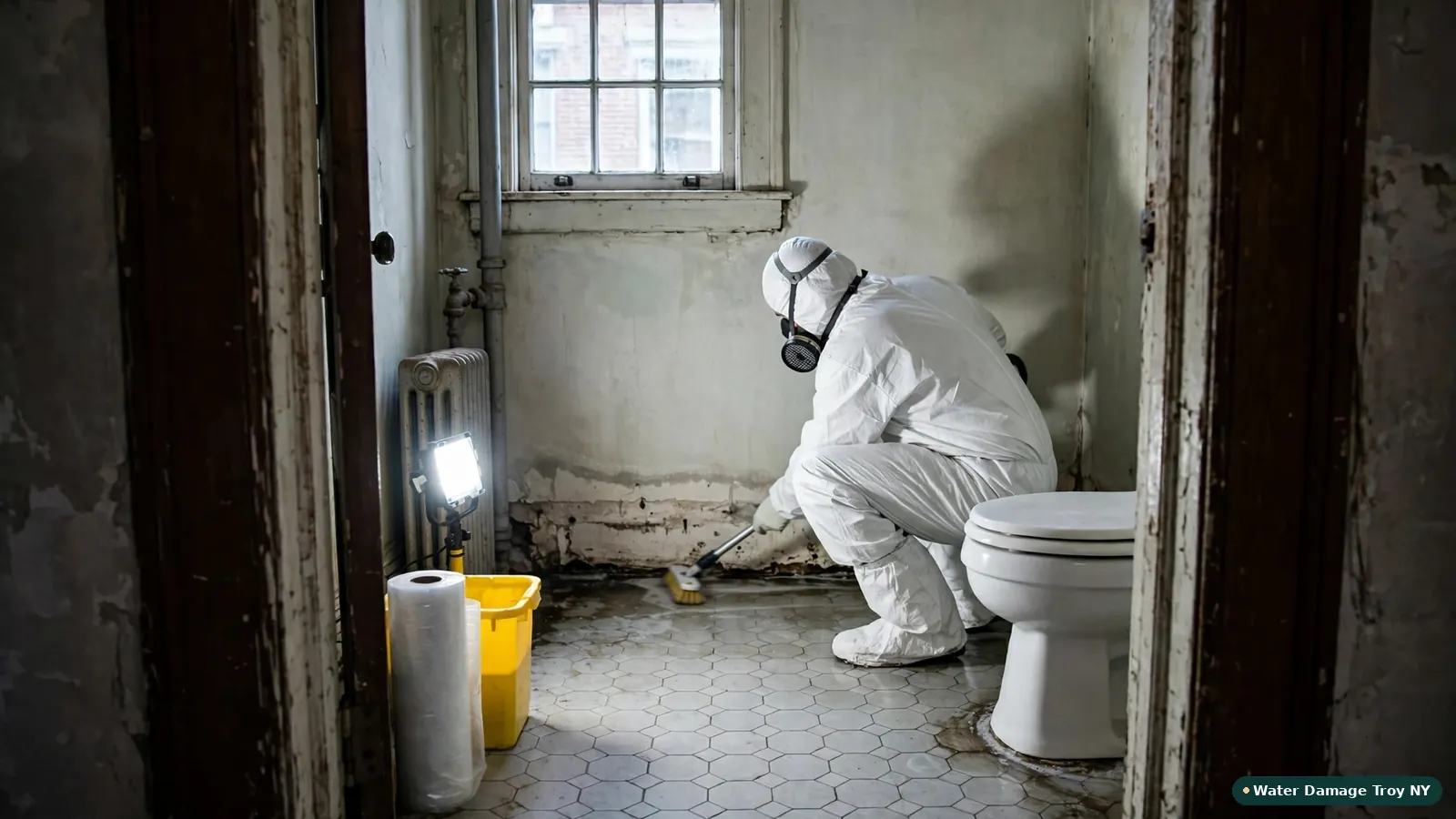
Sewage Backup Cleanup in Troy, NY
Sewage backup cleanup in Troy, NY is a health job first and a water job second. When waste comes up through a cellar floor drain, toilet or tub, it carries bacteria and viruses into everything porous. Our crew removes it in full protective gear, disinfects floors, stone walls and framing, removes what cannot be saved and dries the space so it is safe to use again.
Why Sewage Backs Up Into Troy Basements
Troy's sewer system grew up with the city, and parts of it are more than a century old. Like many older Northeast cities, much of Troy is served by combined sewers, which carry both rainwater and wastewater in the same pipes. During heavy rain or fast snowmelt, those pipes can fill up, and water looks for the easiest way out, which is often the lowest drain in your basement.
The pipes inside and under older homes add their own risks:
- Clay and cast-iron laterals. Many homes in Lansingburgh, Central Troy, South Troy and Little Italy still have original clay or cast-iron sewer laterals. Clay joints let tree roots in; cast iron corrodes and scales until it narrows.
- Old cellar floor drains. Many basements have a floor drain tied straight into the sewer with no backwater protection.
- Mature street trees. The big trees that make Troy's older streets beautiful send roots hunting for moisture in sewer lines.
- Grease and wipes. In multi-family buildings, one tenant's habits can clog a line that several households share.
- Shared lines. In two-families and rowhouses, a clog can send one household's wastewater into another's basement.
What Should You Do When Sewage Backs Up in Your Troy Basement?
Quick answer: stop using all water in the house, keep everyone out of the affected area, do not touch the water without gloves and boots, open nothing to the rest of the house, take photos and call a sewage cleanup crew. If several homes on your street are affected, report it to the city's sewer department too. Sewage is Category 3 black water and carries bacteria and viruses.
Our Sewage Backup Cleanup Process in Troy
Stage 1: Protect people. Our crew wears protective suits, gloves, boots and respirators, and we keep your family and pets out of the area.
Stage 2: Contain. Barriers and, when needed, negative air keep contamination from spreading upstairs.
Stage 3: Remove the waste. Pumps and extractors remove sewage and water, and solids are bagged and disposed of properly.
Stage 4: Remove porous materials. Carpet, pad, drywall, insulation and other porous items that sewage touched are removed.
Stage 5: Clean and disinfect. Floors, stone and brick walls, framing, stairs and fixtures are scrubbed and treated with EPA-registered disinfectants. Mortar joints in old foundations get extra attention.
Stage 6: Dry. Dehumidifiers and air movers run only after cleaning, so contamination is not blown around.
Stage 7: Deodorize and verify. Odor control removes lingering smells, and final moisture readings confirm the space is ready for rebuilding.
What Has to Go and What Can Stay After a Troy Sewage Backup
Remove and replace:
- Carpet and pad
- Drywall and insulation touched by sewage, cut to a clean line
- Upholstered furniture, mattresses and fabric items that sat in it
- Cardboard boxes, books and paper
- Particleboard furniture and cabinet boxes
Clean, disinfect and keep:
- Concrete floors and stone, brick or block foundation walls
- Tile and sealed hard flooring
- Metal, glass and hard plastic items
- Solid wood framing and stair stringers, once cleaned, treated and dried
We photograph and list everything removed so your claim is complete.
Sewage Backups in Troy Two-Families and Apartment Buildings
Two-family houses and apartment buildings across Troy often share one sewer line and one basement. When the line clogs, waste from the upstairs unit can come up through the downstairs tub, toilet or the basement floor drain, and the people affected may not be the ones causing it.
On these jobs, we tell every household to stop using water until the line is cleared, coordinate with the owner and plumber, clean and disinfect each affected unit and document each one separately. Landlords get a clear report for their insurer and their tenants, which helps avoid disputes about who caused what.
Preventing Sewer Backups in Troy Homes
- Ask a plumber about a backwater valve on your sewer line, especially if your floor drain has backed up before.
- Have an older clay or cast-iron lateral camera-inspected and cleared of roots every few years.
- Keep grease out of sinks and wipes out of toilets, even ones labeled flushable.
- Use a floor drain check plug in old cellar drains.
- During heavy downpours, hold off on laundry, dishwashers and long showers if you have had backups.
- Ask your agent about adding sewer and drain backup coverage to your policy.
In multi-family buildings, a short note to tenants about what not to flush can prevent a lot of calls.
Warning Signs of a Sewer Backup in Troy Homes
A sewer backup usually gives warnings before it floods the basement. In Troy, the most common causes are tree roots in old clay or cast-iron laterals, grease buildup, a collapsed section of pipe, and combined sewers that surcharge in heavy rain. Watch for:
- Gurgling sounds from drains or toilets when another fixture is used
- Several drains running slowly at the same time
- Water rising in the basement floor drain or the lowest shower
- A sewage smell near drains, especially after a storm
- The toilet bubbling or backing up when the washer drains
If you see two or more of these signs, stop using water in the house, keep everyone out of the basement and call (518) 317-2788. Water Damage Troy NY handles the cleanup; a plumber clears or repairs the line. flooded basement cleanup in Troy
More Ways Our Troy Crew Can Help
Sewage Backup Cleanup in Troy, NY at a Glance
Short answer: a sewage backup is Category 3 water and needs protective gear, containment, removal of porous materials it touched, disinfection and drying. Keep people and pets out, stop using water in the house and call for cleanup the same day.
- Common Troy causes: heavy storms surcharging older combined sewers, root intrusion and blocked laterals.
- Do not: use bleach on carpet, run fans before cleanup or wash contaminated items with the family laundry.
- What goes: carpet, pad, drywall and insulation touched by sewage.
- What stays: hard surfaces like tile, concrete and sealed wood after cleaning.
- Health: wash hands often and see a doctor if you feel sick after contact.
- Prevention: a backwater valve and keeping grease and wipes out of drains.
Water Damage Troy NY handles the cleanup, then helps you plan prevention. Basement drying after a backup is on our flooded basement cleanup page.
How Sewage Cleanup Protects Your Family in a Troy Home
Raw sewage carries bacteria, viruses and parasites that can make people sick through skin contact, splashes or breathing in droplets. That is why sewage cleanup in a Troy basement looks very different from drying a clean-water leak.
- Protective gear: waterproof boots, gloves, eye protection and a respirator for anyone working in the area.
- Containment: plastic barriers and closed doors keep contaminated air and dust from spreading upstairs.
- Air filtration: HEPA air scrubbers clean the air while materials are removed.
- Removal: carpet, pad, drywall, insulation and other porous items that touched sewage are bagged and taken out.
- Disinfection: hard surfaces are cleaned first, then treated with a disinfectant left on long enough to work.
- Drying: the space is dried only after cleaning, so fans do not blow contamination around.
If you cleaned up a small backup yourself and later feel sick, tell your doctor about the exposure.
Water Damage Troy NY uses this level of protection on every sewage job in Troy, so your family and our crew stay safe while the basement is restored. mold remediation in Troy
Why a Sewage Smell Lingers in Some Troy Basements
A sewage odor that lingers after cleanup is a sign something was missed. In older Troy basements, the smell often hides in places a quick mop-and-bleach job never reaches.
- Porous block and fieldstone walls that soaked up wastewater and need deep cleaning and sealing.
- The bottom plate of framed walls, where water wicked up behind paneling or drywall.
- Floor drains and dry traps that let sewer gas back into the room. Pour water into rarely used drains every few weeks.
- Cardboard boxes, rugs and stored clothing that sat in the water and were moved to another room.
- Ductwork or a furnace return near the floor that pulled contaminated air through the house.
- Cracks in the slab where wastewater settled below the surface.
Proper cleanup removes contaminated porous materials, cleans and disinfects every hard surface, and then dries the space completely. Odor control comes last, after the source is gone, not as a cover-up.
If a smell comes back weeks after a backup, call Water Damage Troy NY. It usually means a pocket of contamination or moisture was missed, and it is easier to fix early.
Sewage Backup FAQs for Troy, NY
The questions Troy homeowners and landlords ask us most after a sewage backup.
Can carpet be saved after a sewage backup?
No. Carpet and pad soaked by sewage cannot be reliably sanitized and are removed. Tile, sealed concrete and vinyl can usually be cleaned and disinfected.
How long does sewage cleanup take in a Troy basement?
Removal, cleaning and disinfection typically take one to two days for a basement backup. Drying takes another two to five days, often longer when stone or brick foundation walls are involved.
Is a sewer backup covered by homeowners insurance in New York?
Many standard New York homeowner policies exclude water that backs up through sewers or drains unless you added a sewer and drain backup endorsement. Ask your agent what you have. We document the source, the damage and the cleanup so your claim is clear either way.
Can my family stay home during sewage cleanup?
Usually yes, if the backup is limited to the basement and you can keep the door closed. Families with infants, older adults or anyone with a weakened immune system may want to stay elsewhere until disinfection is complete. In a two-family where both units share a basement, we will advise both households.
Will the sewage smell leave my basement?
Yes, once contaminated materials are removed and every surface is cleaned, disinfected and dried. A lingering smell usually means something porous was left behind or a stone wall is still damp. We use odor control equipment and do a final check before we leave.
Get Sewage Backup Cleanup in Troy Today
Sewage in your basement is a health hazard that gets worse with time. Our Troy crew has the protective gear, extraction equipment and disinfectants to make it safe again, starting today.
Many older parts of Troy run on combined sewers, which carry storm water and sewage in the same pipe. During a heavy Capital Region downpour that line can surcharge and push sewage up through basement floor drains in South Troy, Lansingburgh and downtown. Water Damage Troy NY handles it as Category 3 water: protective gear, removal of porous materials, disinfection and a written record for your sewer backup coverage.
Water Damage Troy NY serves Troy, Lansingburgh, South Troy, Watervliet, Cohoes, Green Island, Brunswick, Wynantskill and nearby Rensselaer County.