Ice Dam & Roof Leak Water Damage in Troy, NY
Ice dam water damage in Troy, NY usually shows up as a stain on an upstairs ceiling or water running down a wall during a winter thaw. By then, insulation and framing are already wet. Our crew traces the leak path, removes soaked insulation, dries attics, walls and plaster or drywall ceilings, and repairs the damage before mold sets in.
Why Ice Dams Are So Common in Troy, NY
Capital Region winters are made for ice dams. Snow piles up on roofs, then a sunny afternoon or a warm spell melts it while nights drop well below freezing again. That freeze-thaw cycle repeats for weeks from December into March.
Troy's housing makes the problem worse. Many Victorians and older homes on the Eastside, in Sycaway, Beman Park and Lansingburgh have complicated rooflines with valleys, dormers and turrets where snow collects. Older attics often have little insulation and plenty of air leaks, so heat from the living space warms the roof deck. Rowhouses with low-slope or flat roofs can trap meltwater behind parapets and around drains. Even newer homes in Brunswick and North Greenbush get ice dams when bathroom fans or recessed lights dump warm air into the attic.
The damage often shows up far from the roof edge. Water runs along rafters and inside walls, then appears as a stain on a second-floor ceiling, peeling paint over a window or a drip from a light fixture. By the time you see it, insulation and framing have usually been wet for a while.
What Is an Ice Dam and Why Do Troy Roofs Leak?
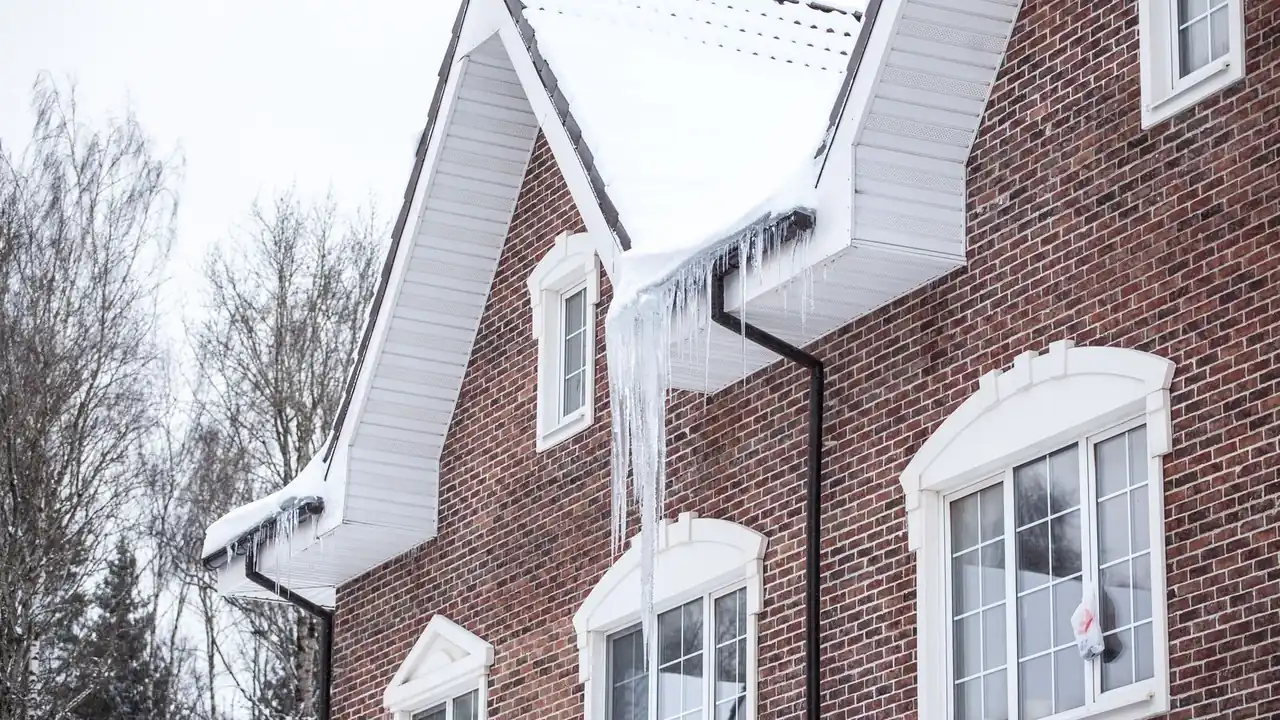
Quick answer: an ice dam is a ridge of ice that forms at the edge of a roof when heat from the house melts snow higher up and the water refreezes at the cold eaves. Meltwater then backs up behind the ice, slips under shingles and leaks into the attic, walls and ceilings. In Troy, long freeze-thaw winters and older, lightly insulated homes make ice dams especially common.
Signs of Ice Dam Water Damage in Troy Homes
Ice dam leaks are sneaky because the water usually is not where the stain shows up. Watch for:
- Thick ridges of ice along the gutters and eaves with icicles hanging below
- Brown or yellow stains on ceilings near exterior walls
- Peeling paint or bubbling plaster at the top of exterior walls
- Water running down the inside of window frames on upper floors
- Damp or frosty insulation and sheathing in the attic
- Drips from light fixtures or smoke detectors near the outside walls
- A musty smell in upstairs closets and knee-wall storage spaces
Our Ice Dam Leak Drying Process in Troy
Stage 1: Find the water path. We start in the attic, where possible, and trace water along rafters, top plates and wall cavities with moisture meters and thermal imaging.
Stage 2: Protect the rooms below. Furniture and floors are covered, and sagging ceilings are drained safely.
Stage 3: Remove soaked insulation. Wet blown-in or batt insulation is compressed and useless, and it holds water against the ceiling. We bag it and remove it.
Stage 4: Dry the attic and ceilings. Dehumidifiers and air movers dry roof sheathing, rafters and the top of the ceiling, while ceiling and wall cavities are dried from below.
Stage 5: Open only what must go. Ceiling sections that sagged, crumbled or tested too wet to save are removed cleanly.
Stage 6: Treat and verify. Framing gets an antimicrobial treatment, and we confirm dry readings.
Stage 7: Restore. We replace insulation, repair plaster or drywall, seal stains and paint.
What to Do (and Not Do) When an Ice Dam Leaks in Your Troy Home
- Do not climb onto an icy roof or chop at the ice with a hammer or shovel. You can damage the shingles and get hurt.
- Put buckets and towels under drips, and move furniture, rugs and electronics away.
- If a ceiling bulges with water, keep everyone out from under it and turn off the light circuit in that room.
- Photograph the stains, drips and the ice on the roof from the ground.
- Do not paint over stains until the area is confirmed dry.
- Call for drying even if the drip stops. Water left in insulation and wall cavities keeps causing damage after the leak quits.
How to Prevent Ice Dams on Troy Roofs
Capital Region winters bring heavy snow and constant freeze-thaw cycles, which is exactly the recipe for ice dams on Troy's older roofs. The real cause is heat leaking into the attic, so prevention starts there:
- Air-seal attic bypasses around chimneys, plumbing stacks, light fixtures and the attic hatch
- Add attic insulation to keep heat in the living space
- Make sure soffit and ridge vents are open so the roof deck stays cold
- Rake the first few feet of snow off the roof from the ground after big storms
- Keep gutters clear in late fall so meltwater can drain
- Never chip ice with tools, which can tear shingles and flashing
After we dry the damage, Water Damage Troy NY can point out the warm spots in your attic so your roofer or insulation contractor knows exactly where to start. ceiling water damage repair
More Ways Our Troy Crew Can Help
Ice Dam and Roof Leak Damage in Troy, NY at a Glance
Short answer: ice dams form when heat from the house melts roof snow that refreezes at the cold eaves. Water backs up under shingles and leaks into attics, walls and ceilings. Remove snow from the roof edge safely, then dry wet insulation and framing quickly.
- Signs: icicles along gutters, stains on upper-floor ceilings and wet attic insulation.
- Safe snow removal: use a roof rake from the ground, never climb onto an icy roof.
- Do not chip ice with tools; it damages shingles.
- Long-term fixes: more attic insulation, better ventilation and sealing air leaks.
- Hidden damage: water can travel inside exterior walls to lower floors.
- Timing: Troy ice dams peak in January and February after snow and cold.
Water Damage Troy NY dries attics and ceilings, then repairs what cannot be saved. See our ceiling water damage repair page.
What Ice Dams Do Inside a Troy Attic
Ice dam leaks often do the most damage where nobody looks: the attic. By the time a stain shows on a bedroom ceiling, insulation and roof sheathing may have been wet for days or weeks.
- Insulation: wet fiberglass mats down and loses its value; wet cellulose clumps and holds water against the ceiling below. Both usually need removal where soaked.
- Roof sheathing: plank or plywood decking near the eaves can darken, delaminate or grow mold.
- Rafters and top plates: these often dry well if found early, but long-term wetting can lead to rot.
- Wiring and light fixtures: water near ceiling boxes is a shock risk until an electrician checks it.
- Kneewall attics: common in Troy Cape Cods and older homes, these hide wet insulation behind small doors.
After drying, upgrading attic air sealing and insulation lowers the chance of the next ice dam.
Water Damage Troy NY dries what can be saved and replaces what cannot, so the attic is ready for the next Capital Region winter.
Winter Roof Leaks in Troy Rowhouses With Flat Roofs and Parapets
Many downtown Troy rowhouses and commercial buildings have low-slope or flat roofs hidden behind brick parapets. These roofs do not form classic icicle-lined ice dams, but snow and ice cause leaks in their own way.
- Frozen scuppers and roof drains trap meltwater, so it ponds against the parapet and finds its way through flashing.
- Snow piled against parapet walls melts slowly and soaks into old brick and mortar joints.
- Shared roofs between neighboring rowhouses let water travel along the deck into the unit next door.
- Top-floor ceilings and the upper part of party walls show stains first.
- Clearing drains and scuppers before big storms and after thaws prevents most of these leaks.
If you own a rowhouse near Washington Park, Little Italy or downtown, ask your roofer to check parapet flashing and drains every fall.
Water Damage Troy NY dries rowhouse ceilings and top-floor walls after these leaks and documents the source for your roofer and insurer. historic home water damage in Troy
Checking for Hidden Damage After the Snow Melts in Troy
Some ice dam damage only shows up after the snow is gone. Once the roof clears in March, take a few minutes to look for leftover problems.
- Faint new stains on top-floor ceilings and around window tops.
- Peeling paint or bubbling on exterior walls under the eaves.
- Gutters pulled loose or bent by ice weight.
- Damp or compressed insulation near the attic edges.
- A musty smell in upstairs closets or kneewall spaces.
If you find any of these signs, Water Damage Troy NY can check the attic and walls with meters before hidden moisture turns into mold.
Ice Dam Water Damage FAQs for Troy, NY
Common questions from Troy homeowners during ice dam season.
Why is water coming through my wall instead of the ceiling?
Water travels along rafters, top plates and wall cavities before it shows up. A stain over a window or in a corner may come from an ice dam several feet away. Thermal imaging and moisture meters help us trace the full path so nothing wet gets closed up.
Can a wet plaster ceiling be saved after an ice dam leak?
Often, yes, if it is dried quickly and has not sagged or delaminated from the lath. Plaster holds more water than drywall and takes longer to dry, so we monitor it closely. Stained areas usually need a stain-blocking primer before paint so the mark does not bleed through.
Does homeowners insurance cover ice dam water damage in New York?
Sudden water damage from an ice dam leak is commonly covered by New York homeowner policies, though the cost of removing the ice itself or fixing worn roofing may not be. Ask your agent, and we will document the leak path, the wet materials and the drying for your claim.
Do you remove the ice dam from the roof?
Usually not. Ice and snow removal from the roof is roofing work, and we leave it to roofers with the right safety gear. We focus on the inside: drying the attic, insulation, walls and ceilings and repairing the damage. We can recommend calling a roofer to steam the dam if the leak is still active.
Stop the Drip: Call Our Troy Ice Dam Crew Today
Every thaw sends more meltwater into a roof that is already leaking. The sooner the attic, insulation and ceilings are dried, the less you replace and the lower the risk of mold. Our Troy crew is ready now.
Ice dams are a Troy winter staple, especially on older homes with thin attic insulation in Lansingburgh, the Eastside and along Pawling Avenue. Heat escaping into the attic melts the snow, the water refreezes at the cold eaves, and the next thaw backs up under the shingles. Water Damage Troy NY dries the attic, ceilings and walls, then shows you where the heat is getting out.
Water Damage Troy NY serves Troy, Lansingburgh, the Eastside, Sycaway, Brunswick, Wynantskill, North Greenbush, Poestenkill, Averill Park and nearby Rensselaer County.