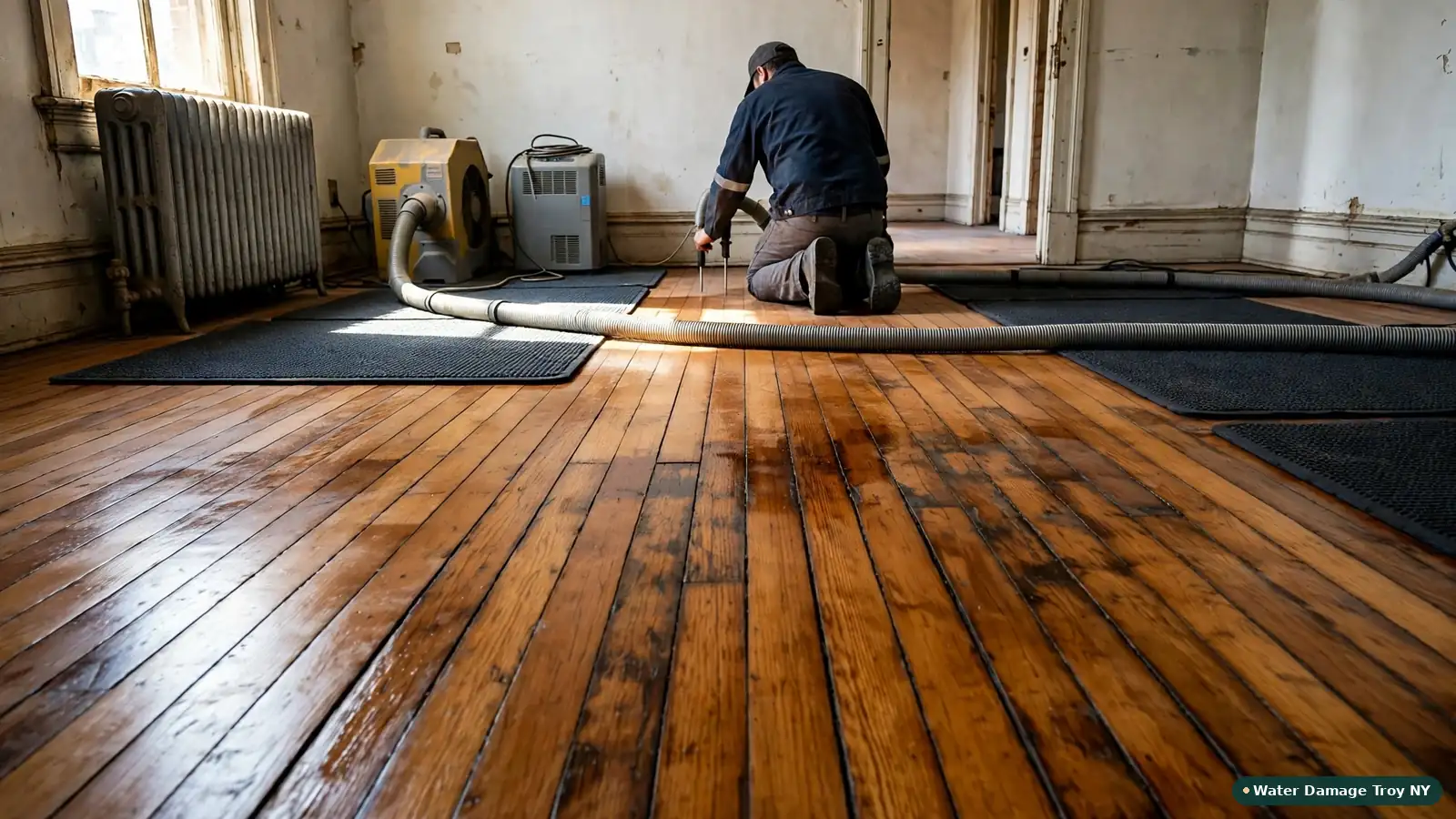
Hardwood Floor Water Damage in Troy, NY
Hardwood floor water damage in Troy, NY does not have to mean ripping out original oak. Fast drying with mats that pull water out of the boards, plus drying the subfloor from below, saves many floors that look ruined. We handle burst pipes, appliance leaks and radiator leaks across Troy's older homes. water damage restoration in Troy
Can Wet Hardwood Floors in Troy Homes Be Saved?
Quick answer: often, yes. Solid hardwood that got wet from clean water and is dried within a day or two with specialized drying mats and dehumidifiers can usually be saved, even if it has started to cup. Fans alone are not enough, because the water is in the bottom of the boards and the subfloor. Floors soaked for many days, or by sewage or floodwater, usually need to be replaced.
What Gets Hardwood Floors Wet in Troy Homes
- Burst pipes in exterior walls during January cold snaps burst and frozen pipe cleanup
- Dishwasher, fridge line and sink leaks in the kitchen water heater and appliance leaks
- Radiator valve and steam pipe leaks in older homes
- Ice dam meltwater running down walls onto the floor
- Pet accidents and plant overwatering that soak in over time
- Humid summers and a damp basement below pushing moisture up into the boards
How We Dry Hardwood Floors in Troy
Stage 1: Stop the source and extract. Surface water is pulled with weighted extraction tools and floor squeegees.
Stage 2: Measure. Moisture readings across the floor are compared with a dry reference area so we know the target. leak detection and moisture mapping
Stage 3: Lay drying mats. Panels sealed to the floor pull moisture up and out of the boards and the gaps between them.
Stage 4: Dry from below. If there is a basement or crawl space, we dry the subfloor from underneath at the same time. structural drying
Stage 5: Control the room. Dehumidifiers keep the air dry so the wood gives up water steadily without cracking.
Stage 6: Decide and finish. Once readings match the dry area, we decide whether to sand and refinish, replace sections or leave the floor as is. water damage repair and rebuild
Saving Original Hardwood in Older Troy Homes
Walk into a Victorian rowhouse in downtown Troy or a 1920s two-family in Lansingburgh and you will usually find original oak or heart pine floors. Those boards are often thicker than modern flooring and laid over wide plank subfloors, sometimes with layers of old finish and even earlier floors beneath. They are worth saving, and they can rarely be matched exactly if they are torn out.
That changes how we dry them. We remove as little as possible, use drying mats to pull water out of the boards, dry the basement or ceiling below to reach the subfloor from underneath, and bring the wood down slowly so it does not split or gap. Where a few boards cannot be saved, we weave in reclaimed or matching boards so the repair blends in. historic home water damage in Troy
Signs of Water Damage in Troy Hardwood Floors
- Cupping: board edges rise higher than the center. Moisture is coming from below.
- Crowning: the center is higher than the edges, often after sanding too soon.
- Buckling: boards lift off the subfloor. This needs fast action.
- Dark staining or gray lines along the seams.
- Soft or spongy spots, and a musty smell from the floor or the basement below.
- Gaps opening up weeks later as over-dried boards shrink.
Solid, Engineered or Laminate: Which Troy Floors Can Be Saved
Not every wood-look floor responds to drying the same way. Here is how the common Troy floor types usually behave:
- Solid oak, maple or heart pine: the best candidate for drying in place, even after mild cupping
- Engineered hardwood glued down: can sometimes be dried in place, but the layers may separate if soaked long
- Engineered or laminate floating floors: usually need to be lifted so the subfloor underneath can dry
- Laminate with a fiberboard core: swells permanently once wet and is rarely saved
- Any floor soaked by sewage or floodwater: removed for health reasons
We take moisture readings across the floor before recommending anything, and we explain the choice in writing so your adjuster sees why a floor was dried or replaced. structural drying
More Ways Our Troy Crew Can Help
- Historic Home Water Damage
- Structural Drying
- Water Heater & Appliance Leaks
- Burst & Frozen Pipe Cleanup
- Hidden Leak Detection
- Water Damage Repair & Rebuild
Hardwood Floor Water Damage in Troy, NY at a Glance
Short answer: wet hardwood can often be saved if drying starts within a day or two. Floor drying mats pull water from the boards and subfloor while dehumidifiers dry the room. Cupping often flattens as boards dry; sanding should wait until moisture levels are normal.
- Act fast: remove standing water and rugs right away.
- Cupping vs. crowning: cupping happens while wet; crowning often follows sanding too early.
- Old-growth oak in Troy homes is worth saving and often dries well.
- Engineered floors: thin wear layers limit refinishing.
- Subfloor: plank subfloors in older homes dry slower than plywood.
- Signs of hidden damage: dark stains, soft spots or a musty smell.
Water Damage Troy NY dries hardwood in place where readings allow, then plans repairs through our water damage repair team.
The First Hour After Water Reaches Your Troy Hardwood
Hardwood reacts to water within hours. What you do in the first hour can decide whether the floor is dried and saved or torn out and replaced.
- Stop the water at the fixture or the main shut-off.
- Soak up standing water with towels or a wet-dry vacuum rated for water, if it is clean water and the area is safe.
- Lift rugs, runners and floor mats right away so they do not trap water.
- Move furniture off the wet area and put foil or blocks under legs that must stay.
- Do not put heaters or hair dryers on the boards; fast, uneven heat makes cupping worse.
- Take photos before and after you clean up for your insurer.
Then call Water Damage Troy NY. The first day is when hardwood is easiest to save.
When Basement Moisture Cups the Hardwood Above It in Troy Homes
Not every cupped floor in Troy was caused by a spill or leak. In many homes, the water comes from below. A damp basement or crawl space under a hardwood floor sends moisture up into the boards, and they cup slowly over the humid months.
- Cupping that appears every summer and eases in winter points to basement humidity.
- Fieldstone and brick foundations let ground moisture into basements, raising humidity under the floor.
- A basement without a dehumidifier can reach humidity levels that wood above cannot handle.
- Missing or torn vapor barriers in crawl spaces add more moisture.
- Fixing the source, then drying the floor, is the only lasting answer. Sanding first only causes new problems.
If your floors cup every summer, Water Damage Troy NY can measure the basement and subfloor and tell you whether the fix is drying, a dehumidifier or a bigger moisture problem. flooded basement cleanup
Matching Repairs to Original Troy Floors: Species, Width and Finish
When some boards cannot be saved, the goal is a repair you cannot spot. In older Troy homes, that takes more than buying new flooring from a big-box store.
- Species: many Troy homes have red or white oak, maple or heart pine. Each looks different once finished.
- Width and thickness: older floors are often narrower or thicker than today's standard boards.
- Grain and age: old-growth wood has tighter grain and a deeper color that new wood lacks.
- Salvage: boards from a closet or under a built-in can be moved to the visible area.
- Weaving: new boards are woven into the existing floor instead of cut in a straight line.
- Finish: the whole room is often refinished so the color blends evenly.
A careful patch can save most of a room's original floor instead of replacing everything.
Water Damage Troy NY keeps a sample board or photo of your original floor so the repair crew can match it closely. water damage repair
Stairs, Thresholds and Other Hardwood Spots That Hide Water
Some parts of a hardwood floor hide water better than others. In Troy homes, these spots are often where damage is missed and comes back as stains or soft boards months later.
- Stair treads and risers: water runs down stairs and soaks into the stringers underneath.
- Thresholds and transitions: water slips under saddles between rooms and spreads under the next floor.
- Under radiators and baseboard heat: leaks there often go unnoticed for a long time.
- Under area rugs and runners: trapped water stays against the wood.
- Along walls and under baseboards: water wicks into the edge boards first.
- Under kitchen cabinets: hardwood often runs under the cabinets, where it cannot be seen.
Water Damage Troy NY checks stairs and doorways with meters during every hardwood job, because these are the spots that cause problems later.
After Drying: How Long to Wait Before Refinishing Troy Hardwood
Hardwood keeps moving for weeks after a leak, even once it looks dry. Patience after drying saves money and a second repair.
- Wait until the boards reach normal moisture before sanding or refinishing.
- Watch for slight cupping that eases over a few weeks as the wood settles.
- Keep indoor humidity steady, around 35 to 50 percent, during this time.
- Check for soft spots or squeaks that may point to subfloor damage.
Water Damage Troy NY can check board moisture with a meter before you schedule any refinishing.
Hardwood Floor Water Damage FAQs - Troy, NY
Hardwood floor water damage questions we hear most in Troy.
Can water-damaged hardwood floors be saved?
Often, yes, if drying starts within the first day or two and the water was clean. Solid hardwood is more forgiving than engineered or laminate. Floors soaked by sewage or floodwater usually need to come out for health reasons.
How long does it take to dry hardwood floors?
Typically one to three weeks with drying mats and dehumidifiers, depending on the wood species, thickness, how long it was wet and what is underneath. Older Troy floors over plank subfloors often take longer than newer floors over plywood.
Should I sand cupped hardwood right away?
Not right away. Mild cupping often relaxes as the boards dry. Sanding cupped boards too early leaves them crowned, with the centers lower than the edges once they finish drying. Wait until moisture readings match the dry areas, then decide.
Wet Hardwood Floors in Troy? Call Now
Hardwood that got wet today can often be saved. Hardwood that sits wet for a week usually cannot. Call our Troy crew now and give your floors the best chance.
Original oak and maple floors are one of the best things about Troy's older housing, from the Victorian homes around Washington Park to the bungalows in Sycaway. Water Damage Troy NY uses drying mats and controlled dehumidification to pull water out slowly, so those boards can be sanded and kept instead of torn out.
Water Damage Troy NY serves Troy, Lansingburgh, South Troy, the Eastside, Sycaway, Brunswick, North Greenbush and nearby Rensselaer County.